Better for Farmers & Communities.
Better for the Environment.
Better for Investors.
Organic conversion is first and foremost an environmental imperative — eliminating synthetic chemicals, rebuilding soil, and restoring ecosystems. It also happens to be one of the most compelling investment opportunities in American agriculture today.
The Impact Case for Organic
Conventional row crop farming has depleted American topsoil, contaminated waterways, and driven greenhouse gas emissions. Organic conversion directly reverses these trends — rebuilding soil, protecting water, and restoring biodiversity from year one.
The Economic Case for Organic
Organic demand has grown at a +9.2% CAGR since 2009, while domestic supply has failed to keep pace. The result is a persistent supply-demand gap, meaningful price premiums, and a compelling J-Curve return profile for patient capital.
Benefits of Organic & Regenerative Farming
Conventional row crop farming has depleted American topsoil, contaminated waterways, and contributed significantly to greenhouse gas emissions. Strategic Organic conversion reverses these trends.
Soil Regeneration
Rebuilds soil organic matter 0.1–0.3%/yr, improving water retention and fertility.
Water Protection
Reduces nitrate runoff by up to 50%, protecting rivers, aquifers, and communities.
Carbon Sequestration
Sequesters 0.35 T C/ac annually, turning farmland from a carbon source to a carbon sink.
Biodiversity
Restores habitat for pollinators, beneficial insects, and soil microbiomes.
Social Impact
Higher farm income, long-term leases for family operators, and cleaner communities.
From Extractive to Regenerative
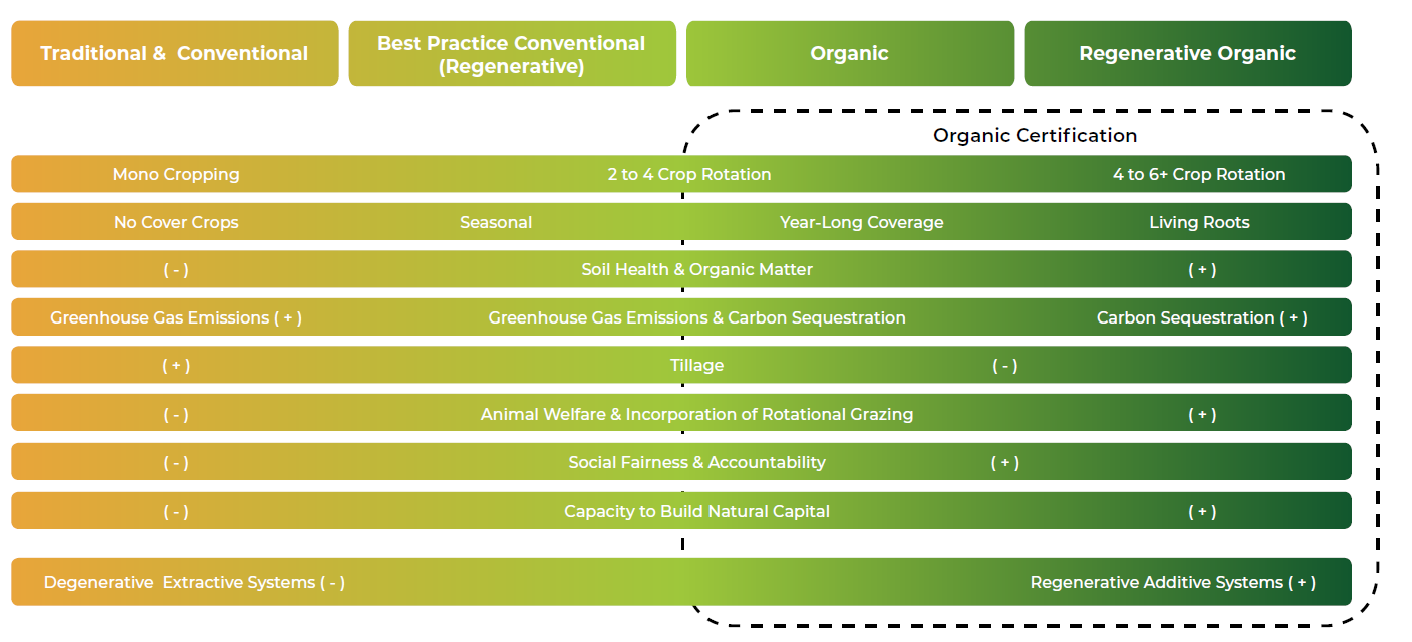
CFAM targets investments within the Organic and Regenerative Organic spectrum — high-value with high impact.
Farming That Strengthens Communities
Organic and regenerative agriculture is not only an environmental imperative — it is a social one. When farmland transitions to organic, the benefits extend far beyond the soil. Farmers earn more, rural communities grow stronger, and the food system becomes more resilient for the next generation.
Farmer Livelihoods
Organic premiums translate directly into higher farm income, allowing growers to earn more per acre under organic certification than they would under conventional contracts — income that stays in rural communities, supports local businesses, and enables reinvestment in land and equipment.
Rural Economic Development
Every organic farm in our portfolio supports a network of local suppliers, agronomists, grain handlers, and equipment operators. By committing to long-term leases with family farming partners, CFAM provides the stability that allows rural businesses and communities to plan, invest, and grow.
Food System Resilience
The U.S. food system depends on a shrinking base of independent family farms. Organic transition helps preserve that base — keeping land in the hands of working farmers rather than consolidating it into large industrial operations.
Healthier Communities
Eliminating synthetic pesticides and nitrogen runoff from farmland has measurable downstream effects on drinking water quality, air quality, and public health in rural counties.
"We believe that the most durable investments are those that make the communities around them stronger. Organic farming is one of the clearest examples of that principle in action."
The Economic Case for Organic
Organic Demand Outstripping the Pace of Supply
The U.S. Organic Food Market is the largest globally, accounting for nearly half of global organic sales. Between 2009 and 2024, domestic organic food sales grew at a +9.2% CAGR, with market share of total food nearly doubling.
This growth is consumer-led and underpinned by secular drivers including age, health consciousness, income growth, and increasing awareness — making it structurally durable rather than trend-dependent.
Critically, domestic supply has not kept pace. The U.S. is increasingly reliant on imports of questionable provenance and standards, creating a persistent and widening supply-demand gap that CFAM is uniquely positioned to address.
Row Crop Conversion Not Keeping Up With Demand
Why Conversion is Slow
A mandatory 3-year transition period before Certified Organic status can be achieved, during which farmers forgo premiums while incurring higher costs.
Significant capital requirements for equipment, soil testing, and operational changes that hinder access.
Specialized knowledge of organic crop rotations, pest management, and certification requirements that is not widely available.
Market access challenges — connecting transitioning farms to organic offtake buyers requires deep relationships that take years to develop.
The CFAM Solution
CFAM is uniquely positioned to help experienced farming partners overcome these barriers through our institutional capital, operational expertise, and deep market relationships.
Long-term leases that align incentives and provide the time horizon needed for organic transition
Institutional capital to fund transition costs, equipment upgrades, and innovative technology solutions
Agronomist support and organic operations expertise from our in-house team
Established offtake relationships with organic processors, dairies, and food companies
Proven track record: 5,700+ acres in Certified Organic & 13,000+ acres in transition in Meadowlark Fund I
- Conventional
- Organic
Driving Value Through Organic Premiums
Because of strict barriers to entry and strong consumer demand, Certified Organic crops command significant and durable premiums over conventional crops — premiums that flow directly to farm profitability, cash rents, and ultimately land values.